
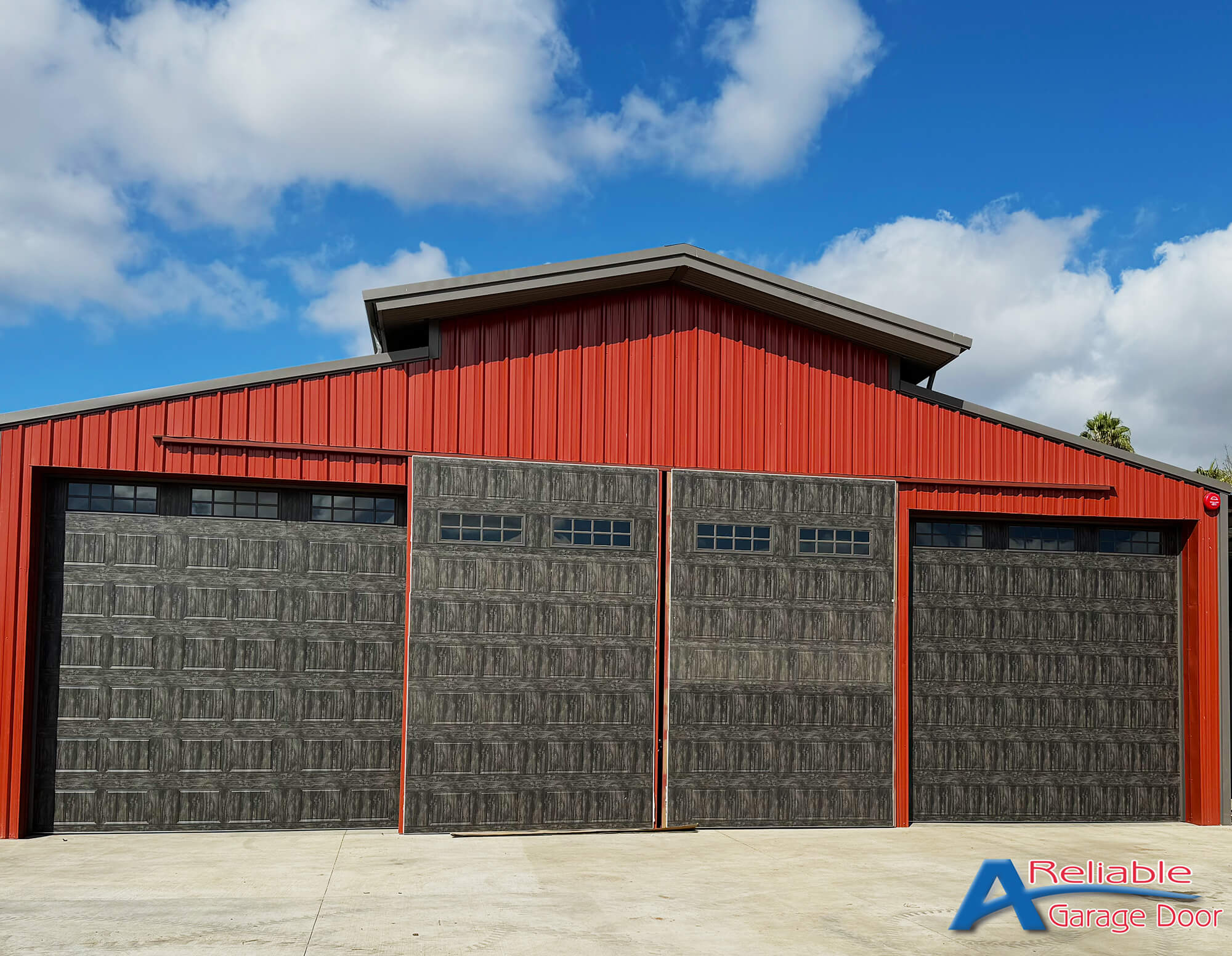
Commercial garage doors,
built for the workload.
Installation, repair, and maintenance for businesses across San Diego County — rolling steel, sectional overhead, high-cycle hardware, and operators sized for doors that run all day.
The full commercial door scope.
Rolling Steel & Roll-Up Doors
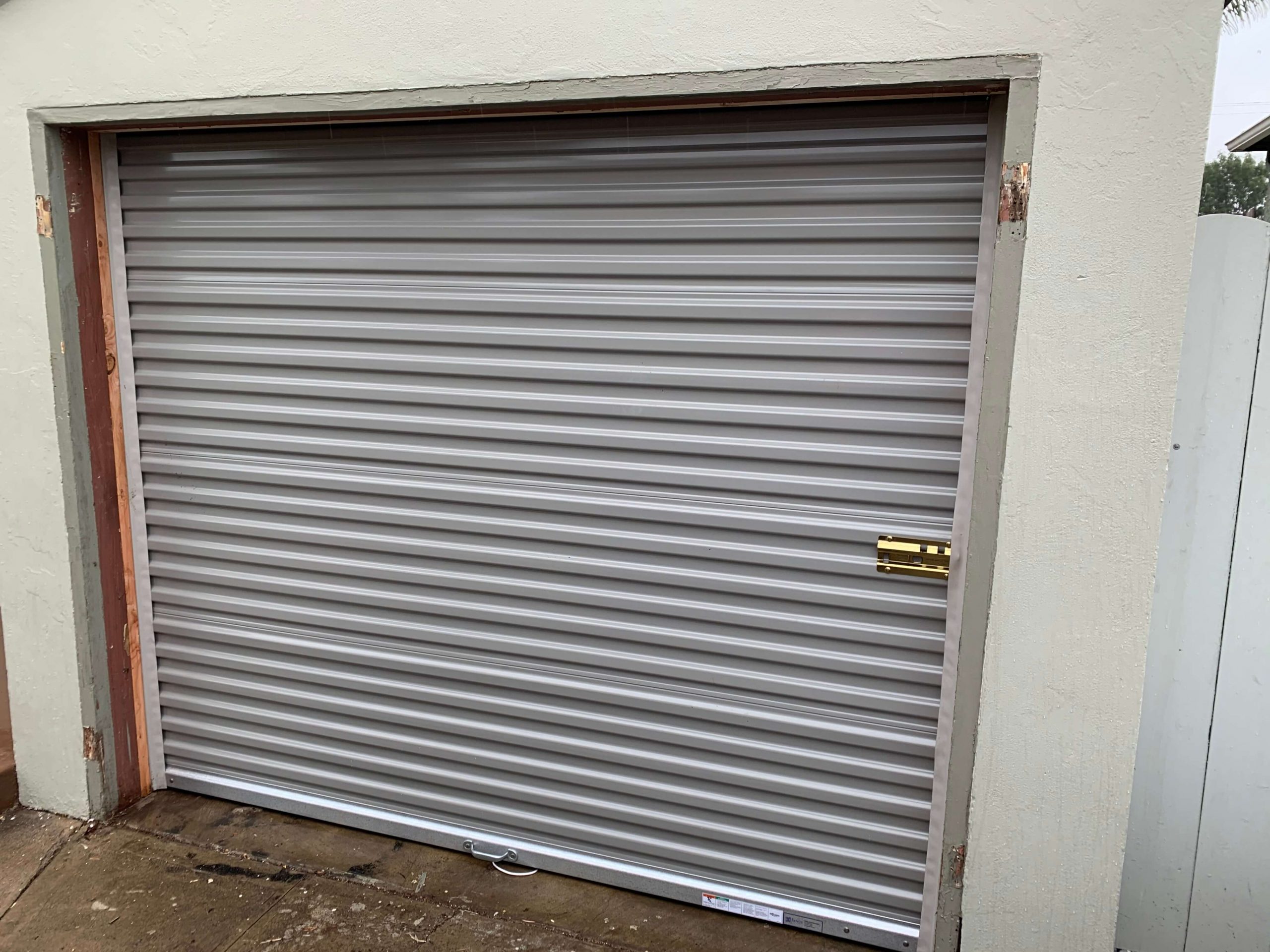
01Coiling service doors and roll-up doors for warehouses, storage, and loading areas. Janus and comparable commercial lines.
Sectional Overhead Doors
02Insulated and non-insulated commercial sectional doors — the workhorse for shops, garages, and fleet bays.
High-Cycle Springs & Hardware
03Commercial doors cycle far more than residential. We spec high-cycle torsion springs and heavy-duty hardware built for the workload.
Commercial Openers & Operators
04Jackshaft and heavy-duty trolley operators sized to the door, with the safety devices a commercial setting requires.
Repair & Emergency Service
05A stuck door can shut down a business. We diagnose and repair springs, cables, rollers, tracks, and operators — fast.
Preventive Maintenance
06Scheduled tune-ups keep high-traffic doors running and catch wear before it becomes downtime. Ask about recurring service.
Businesses that can't afford a door that won't open.
Same family-run crew, same licensed and insured work — scaled up for commercial hardware and the schedules businesses run on.
Why a commercial door is a different job
A house door cycles maybe four times a day. A door on a busy shop, a fleet yard, or a self-storage row can cycle forty. Same mechanism, ten times the wear — which is why commercial doors do not fail the way residential ones do. They fail on a schedule, and usually at the spring.
Torsion springs are rated in cycles, not years. Put a standard residential spring on a door that runs all day and it will do exactly what it was built to do, only far sooner than anyone expected. The fix is not a better brand — it is a spring specified for the duty, along with hardware, rollers, and an operator sized for the same workload. That mismatch is the most common thing we find on a commercial door somebody else worked on.
It is also why the cheapest repair is rarely the cheapest outcome. A spring swapped for whatever was on the truck buys a few months. Sized properly, it buys years — and on a door your business actually depends on, the second failure costs more than the first repair ever did.
Roll-up or sectional?
Most commercial openings come down to one of two answers, and the building usually decides it rather than preference.
Rolling steel and roll-up doors coil into a barrel above the opening. They take up almost no ceiling, which is what makes them the default for storage rows, loading areas, and any bay where the headroom is already spoken for. They are built to be worked, not admired.
Sectional overhead doors run back along the ceiling on tracks. They insulate better, seal better, and look considerably better from the street — which matters for a storefront, a dealership, or a shop customers walk into. They need the overhead space to do it.
If you are not sure which your opening will take, that is a measuring question rather than a catalogue question. We come look at it before quoting anything.
Questions businesses ask.
- Do you service commercial doors you did not install?
- Yes, and most of what we service we did not install. Springs, cables, rollers, tracks, and operators are serviceable regardless of who hung the door or whose name is on it.
- What is the difference between a roll-up and a sectional door?
- A roll-up coils into a barrel above the opening and uses almost no ceiling, which suits storage rows and loading bays. A sectional runs back along the ceiling on tracks, insulates and seals better, and looks better from the street — but it needs that overhead space. Your building usually decides it, not your preference.
- How quickly can you get a door working again?
- It depends on the part. Common springs, cables, and rollers are usually a single visit. Specialty commercial hardware, a non-standard size, or a replacement operator has to be ordered, and we will tell you that timeline when we diagnose it rather than after.
- Do you work with property managers and multi-site accounts?
- Yes — property managers, HOAs, self-storage, warehouses, auto shops, and fleet yards are a regular part of the work. If you have several doors or several locations, walking them all at once is usually the cheaper way to handle it.
- Why do commercial doors need high-cycle springs?
- Torsion springs are rated in cycles, not years. A door that opens forty times a day burns through a residential-rated spring quickly. Specifying the spring to the actual duty is what keeps the door out of the repair queue.
- Do you cover my part of San Diego County?
- We work across the county from Lemon Grove — the coast, the central neighborhoods, and out through the East County. If you are not sure whether you are inside the line, call and ask.
Doors we've put to work.
Need a commercial door serviced or installed?
Tell us the door type and the problem — we'll get you a straight answer and a quote. Emergency commercial repairs, same-day when we can.